Best Liquid Waterproofing Membranes: Selection Guide
A technical decision matrix on solids content, elongation, curing kinetics, and substrate compatibility for foundation, roof, and wet-area liquid membranes.
- Four Decisive Selection Metrics: Volume solids content, ultimate tensile elongation, tack-free curing kinetics, and dry film thickness (DFT) retention dictate liquid membrane longevity.
- Elimination of Mixing Errors: Single-component (1K) moisture-cure polyurethane and MS polymer formulations eliminate off-ratio mixing failures inherent in 2-pack systems.
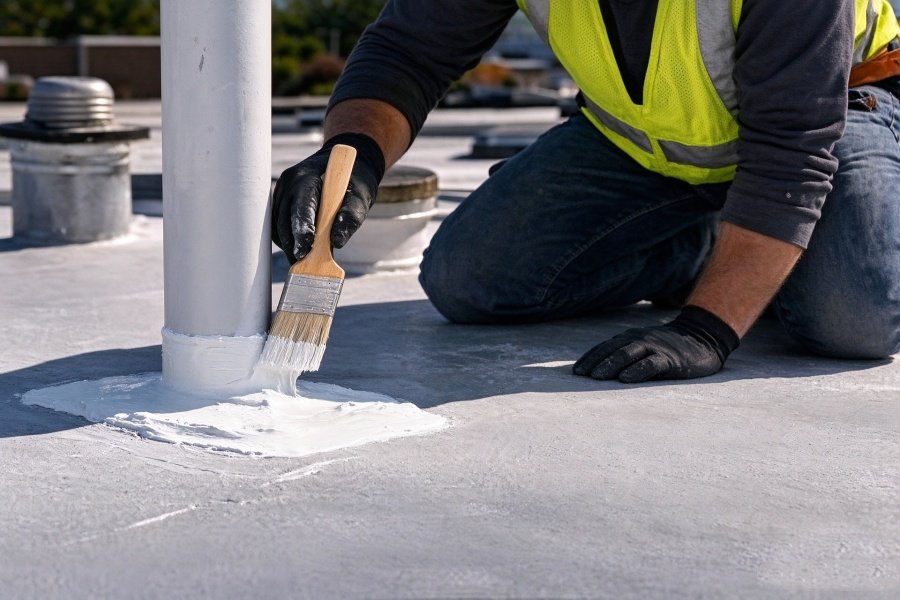
- Superiority in Complex Detailing: Liquid membranes outperform preformed sheet membranes around pipe clusters, parapet upstands, and irregularly shaped penetrations.
- High-Elongation for Below-Grade Concrete: Sub-grade retaining walls and structural slabs require extreme elongation (>1000%) to bridge dynamic settlement fissures.
- Primer Substrate Specificity: Dense concrete, gypsum board, and cementitious backer boards require tailored primers to prevent vapor-induced pinholing.
What makes a liquid waterproofing membrane the best choice for a project?
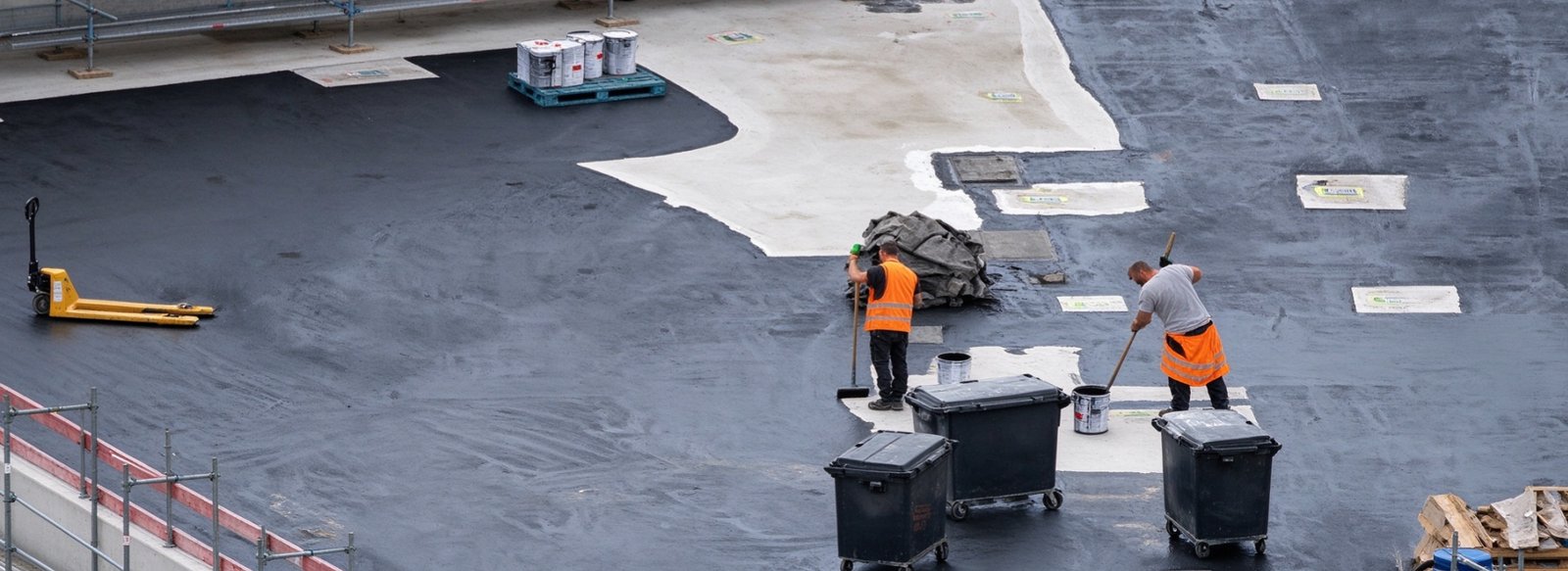
Traditional sheet membranes rely on torch-welded or adhesive-taped seams every 1 meter. Field forensic data demonstrates that over 85% of membrane failures originate directly at seam lap joints. Liquid-applied systems cure into a continuous rubberized envelope that bonds tenaciously across concrete, masonry, and metal.
How do you check the solids content of a liquid membrane?
Low-cost market coatings often pad formulas with cheap volatile solvents. Contractors who measure wet film think they have achieved specification, only to find the cured dry film is paper-thin after curing. Always specify high-solids formulations (>90% by volume) tested under ASTM D2697.
Which liquid membrane is best for concrete foundations?
Below-grade civil structures experience continuous soil settlement, seismic micro-movements, and rising hydrostatic groundwater pressure. The WP-001 high-elongation membrane specifications provide elastomeric elasticity that stretches across substrate cracks up to 3mm wide without puncturing.
What is the best liquid membrane for showers and wet rooms?
Indoor wet room contractors cannot tolerate pungent solvent fumes in enclosed spaces. Review the shower membrane spec sheet to see how MS hybrid chemistry compresses tiling schedules from 3 days down to 24 hours.
Liquid applied membrane versus sheet membrane: which wins?
The comparison table below details critical trade-offs between liquid and sheet waterproofing systems:
| Selection Factor | Liquid-Applied Elastomeric Membrane | Torch-On Bituminous Sheet | Self-Adhesive Sheet Membrane |
|---|---|---|---|
| Seam Vulnerability | Zero seams (Monolithic) | Seams every 1 meter (High risk) | Seams every 1 meter |
| Complex Penetrations | Fast liquid brush/roller detailing | Complex cutting, torching, high fire risk | Difficult to detail tight collars |
| Substrate Adhesion | 100% fully chemical-bonded | Partial torch bond / hollow pockets | Pressure-sensitive adhesive bond |
| Lateral Water Migration | Impossible (Water trapped at breach) | High (Water travels under sheets) | Moderate |
| Labor Requirement | 1 to 2 workers with roller/spray | Requires 3-man crew with open flames | 2-man crew with primer |
How many coats of liquid membrane should be applied?
Applying a single heavy coat causes surface skinning, which traps uncured liquid underneath and leads to solvent blisters. Multi-coat cross-hatch application guarantees uniform film build and structural integrity across the entire surface.
What substrate prep does a liquid membrane need?
Moisture within concrete slabs turns into vapor under solar or ambient heating, generating up to 200 kPa of vapor pressure that causes membrane delamination. Applying an epoxy moisture-blocking primer neutralizes outgassing.
How long does a liquid membrane take to cure?
Cold temperatures (<10°C) and low ambient humidity prolong polyurethane cure rates. In high-turnaround commercial hospitality projects, MS polymers offer a significant operational advantage.
Frequently Asked Questions
Our standard minimum order quantity for factory-direct international export is 1,000 kg (approx. 50 pails), palletized and shrink-wrapped.
Yes. CHEMPU ships 1kg to 2kg wet test samples alongside cured tensile dogbone test strips via air express for testing.
We offer 5kg tins for residential detailing, 20kg heavy-duty steel pails for contractors, and 230kg sealed steel drums for large commercial projects.
Aromatic polyurethanes require an aliphatic topcoat on exposed roofs to prevent UV chalking. MS polymers (XYT-S001) are inherently UV-stable.
Yes, provided an elastomeric waterborne coating with matching elasticity is used. Hard architectural enamel paints should never be used.
Unopened pails stored between 5°C and 30°C in a dry climate have a guaranteed shelf life of 12 months from manufacturing date.
Yes. CHEMPU ships full container load (FCL) and less than container load (LCL) shipments to North America, Europe, Australia, and Latin America.
Yes. We offer turnkey private labeling, custom pail silk-screening, and tailored formulation adjustments for regional building code compliance.
- ASTM C836: High Solids Content Cold Liquid-Applied Elastomeric Waterproofing Membrane.
- ASTM D412: Vulcanized Rubber and Thermoplastic Elastomers—Tension.
- ASTM D2697: Standard Test Method for Volume Nonvolatile Matter in Clear or Pigmented Coatings.
- ISO 2808: Determination of wet and dry film thickness.