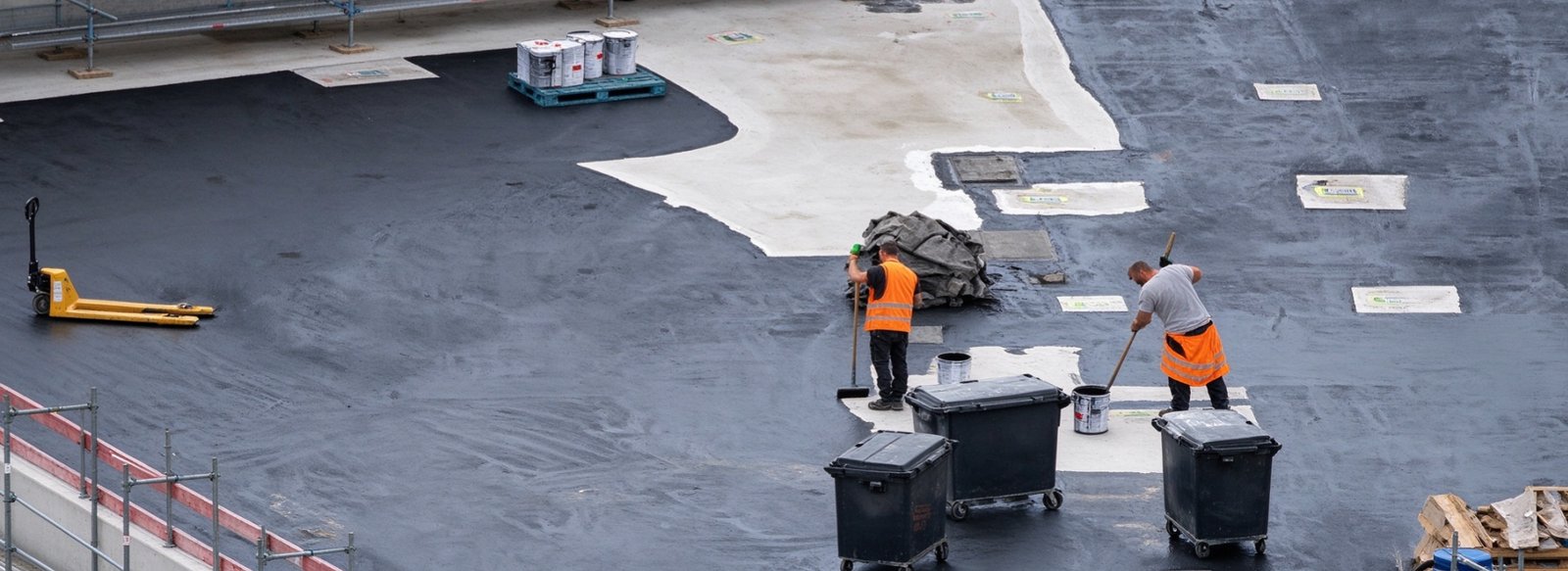
Is Acrylic Paint Waterproof? What Builders Should Know
A technical clarification on polymer film elongation, moisture vapor permeability, and why decorative acrylic paint fails as a waterproofing barrier.
- Direct Technical Conclusion: Standard dry acrylic paint is merely water-resistant, NOT waterproof. It lacks continuous hydrostatic resistance and elasticity.
- The Fundamental Mechanical Divide: Decorative house paint exhibits under 10% elongation and fractures easily, whereas true elastomeric coatings deliver over 300% elongation to bridge live concrete cracks.
- Exterior Walls Demand Vapor Breathability: Facades require water vapor permeability (SD <0.5m) to let internal construction moisture escape while repelling external wind-driven rain.
- The Engineered Alternative: High-solids elastomeric acrylic coatings (CHEMPU WA-100) replace standard paint by providing true commercial waterproofing protection.
- Waterproofing Additives are Insufficient: Stirring liquid sealers into standard retail latex paint does not create a certified commercial waterproofing membrane.
Is acrylic paint waterproof when it dries?
Homeowners and inexperienced specifiers frequently confuse ‘water-repellent’ surface tension with an engineered waterproofing membrane. Decorative house paint cures to a microscopic dry film thickness of only 30 to 50 microns. It contains high pigment volume concentrations (PVC) with porous filler particles that allow moisture to seep through under driving rain pressure.
What is the difference between water-resistant and waterproof coatings?
The engineering comparison table below breaks down the technical differences between retail decorative paint and commercial elastomeric waterproofing coatings:
| Performance Factor | Standard Decorative Acrylic Paint | CHEMPU WA-100 (Elastomeric Coating) | Commercial Liquid Polyurethane |
|---|---|---|---|
| Dry Film Thickness (DFT) | 30 to 50 microns (0.04mm) | 600 to 1,000 microns (0.8mm) | 1,200 to 2,000 microns (1.5mm) |
| Tensile Elongation (ASTM D412) | <10% (Brittle; snaps immediately) | >300% (Bridges 1.5mm cracks) | >1000% (Extreme flexibility) |
| Crack-Bridging Ability | Zero crack-bridging capability | Dynamic micro-crack bridging | Structural crack bridging >2.5mm |
| Water Resistance Rating | Water-resistant (Sheds light rain) | Waterproof under wind-driven rain | Full continuous immersion rated |
| Primary Intended Role | Decorative color and aesthetics | Building facade weatherproofing | Roofs, basements, and wet rooms |
Why do acrylic paints crack on exterior walls?
Exterior stucco and concrete facades experience daily surface temperature swings of over 40°C between direct sunlight and nighttime cooling. When micro-cracks open in the stucco, rigid decorative paint film shears instantly, creating capillaries that siphon moisture into the building wall assembly.
Are acrylic paints waterproof enough for bathrooms?
Bathrooms require certified liquid waterproofing membranes (such as modified silane or polyurethane) applied prior to tiling. Relying on bathroom-rated mold-resistant wall paint behind tiles is an immediate building code violation.
How to make acrylic paint more water-resistant?
Contractors looking to achieve true weatherproofing must stop treating paint as a barrier and instead specify purpose-engineered elastomeric facade systems.
Which elastomeric coating replaces paint for waterproofing?
Review the full WA-100 elastomeric coating specifications to discover how pure acrylic copolymers combine architectural exterior color with ten-year commercial weatherproofing performance.
Can elastomeric acrylic coating be applied over existing paint?
If old paint is flaking or peeling, it must be mechanically removed back to sound masonry; applying an elastomeric coating over failing paint will cause the entire assembly to pull away from the wall.
How long does elastomeric coating last versus paint?
The substantial film thickness (20 times thicker than paint) protects the underlying concrete against carbonation, industrial acid rain, and fungal colonization over long operational timeframes.

Frequently Asked Questions
Material costs for elastomeric coatings average $2.20 to $3.80/m² due to the much higher solids film build, but they deliver lower life-cycle cost by tripling maintenance repainting intervals.
CHEMPU WA-100 can be factory-tinted to over 2,000 architectural colors across standard RAL and Pantone palettes.
Yes. It can be applied using heavy-nap rollers (20mm nap), masonry brushes, or heavy-duty commercial airless spray equipment (0.021″ to 0.027″ tip).
Yes. WA-100 allows internal trapped water vapor to escape freely (permeance 34.28 g/m²·day), preventing interior moisture blisters behind the film.
Yes. It contains zero-leaching, environmentally safe algaecides and fungicides that inhibit black mold, mildew, and lichen formation on shaded building walls.
Yes. We supply 1kg tinted liquid samples and cured elastic test sheets directly to architectural and engineering firms.
Standard white and gray formulations dispatch within 3 business days; custom tinted orders ship in 5 to 7 business days.
At 1.0mm wet film thickness, coverage is approximately 1.2 to 1.4 kg/m² for a two-coat complete weatherproofing installation.
- ASTM D412: Standard Test Methods for Vulcanized Rubber and Thermoplastic Elastomers—Tension.
- ISO 2808: Paints and varnishes — Determination of film thickness.
- ASTM D3359: Standard Test Methods for Measuring Adhesion by Tape Test.
- Water Vapor Permeability Value: 34.28 g/(m²·day) verified per CHEMPU WA-100 Factory TDS.